
Stinging Insects
Take your yard back.
Wasp, hornet and yellow jacket removal.
NC licensed • Family owned
Serving Gaston, Mecklenburg and York counties
Stinging Insects
Hornets, wasps, yellow jackets and bees
Envirosafe Pest Control has the specialized equipment and training to effectively rid your property of yellow jackets, hornets, bees and wasps. We specialize in safe, earth friendly pest control and have been protecting families, their pets and their homes for over 30 years. Our preventive protective barrier treatment deters these stinging pests from nesting on or around your home. Our proactive service targets areas where stinging insects tend to live and breed. Choose a one-time service or a continuing Pest Protection Plan
*Regularly scheduled Perimeter Service visits performed quarterly (every 3 months)
Hostile stinging insects proliferate in spring, summer, and deep into the mild Carolina Fall. Unfortunately, the same weather that tends to bring people outside also brings stinging pests outside.
Stings from yellow jackets, hornets, bees, and wasps are painful but will also often cause serious medical issues such as painful swelling and sometimes even life threatening allergic reactions. Stay safe and let Envirosafe Pest Control do the dirty work.

Know What Is Nesting on Your Property
Not every stinging insect gets treated the same way, and the wrong approach can make a nest more dangerous instead of less. Here is what we find around Gaston County homes:
- Yellow jackets. The most common call we get. They nest in the ground, in wall voids, under decks and inside block walls, and the entrance is often a hole you would never notice until someone runs a mower over it. Colonies peak in late summer and they defend aggressively, in numbers.
- Bald faced hornets. Builders of the grey paper nest the size of a football hanging in a tree, on a soffit or under an eave. They do not need to be provoked to come after you and they can sting repeatedly.
- Paper wasps. The open umbrella shaped nests under railings, in grill covers, inside playsets and behind shutters. Less aggressive until you get close to the nest, which is usually right where people put their hands.
- European hornets. Large, active after dark, drawn to porch lights, and known for stripping bark from shrubs and trees. They nest in hollow trees and wall voids and they startle people badly. See Field Files Case 191 for a European hornet nest we took out of a Mount Holly soffit, and how to tell one from the invasive yellow-legged hornet.
- Mud daubers. The long mud tubes on siding and in carports. Solitary and rarely a threat, but the abandoned tubes get taken over by other insects.
- Carpenter bees. The ones drilling perfect round holes in fascia, decks and railings. Different problem, different treatment, covered on our carpenter bee page.

Late Summer and Fall Are the Dangerous Months
Stinging insect calls climb through August, September and October, and it is not your imagination. A yellow jacket colony that started as a single queen in the spring can be several thousand workers by late summer. At the same time the colony stops raising brood, the workers lose their protein source, and they switch to hunting sugar. That is why they show up at cookouts, trash cans, soda cans and hummingbird feeders right when families are outside the most.
They are also far more defensive at that point in the season. A nest that was tolerable in June will send the whole colony after you in September. The mild Carolina fall stretches that window well past when most people expect it to be over.
Where Nests Turn Up Around a House
- In the ground, along foundations, tree lines, and in old rodent burrows
- Inside wall voids, entering through a gap in siding, brick weep holes or a torn soffit vent
- Under decks, steps, porches and crawl space access doors
- In attics, sheds, detached garages and unused vehicles
- Behind shutters, in grills, in playset tubing and inside patio furniture
- In utility and meter boxes, and in irrigation valve boxes
Why Store Bought Cans Make It Worse
A can of wasp spray knocks down the insects flying at the moment you spray. It does not reach the colony, and that is the part that matters. Two problems follow.
First, a wall void nest sprayed from outside sends the colony looking for another way out, and that way out is often the inside of your house. We get called to living rooms full of yellow jackets that started as a homeowner treating a hole in the siding.
Second, the position people spray from is usually a ladder, at dusk, one handed, near a nest that is about to react. Ground nest stings and ladder falls put people in the emergency room in this county every year. If anyone in the home has a known sting allergy, do not do it at all.
How We Handle It
We locate the actual nest instead of treating where the insects are landing. Once we know what species it is and where the colony sits, it gets treated directly, at the entrance and into the void or ground where the nest lives, so the colony is eliminated rather than scattered.
After that we put down a preventive barrier around the areas where stinging insects tend to nest and breed, the eaves, soffits, railings, foundation line, and the structures around the yard, so new queens do not set up in the same spots. You can take that as a one time service or as part of a continuing Pest Protection Plan with quarterly perimeter visits. We have done this work with specialized equipment and low impact products for more than thirty years, and the crew doing it is trained for it.
Honey Bees Are a Different Call
If it turns out to be honey bees, we are not going to kill them. Honey bees pollinate the food supply and their colonies are worth saving. That is the whole point of Envirosafe’s Save the Bees Initiative. A lot of what people call a bee problem turns out to be yellow jackets or hornets, and part of the visit is telling you which one you actually have.
Stinging Insect Control Across Gaston, York and Mecklenburg Counties
We handle stinging insect calls throughout Gastonia, Belmont, Mount Holly, Cramerton, Dallas, Stanley, Bessemer City and Cherryville in Gaston County, Steele Creek, Pineville and Huntersville in Mecklenburg County, and Rock Hill, York, Clover, Lake Wylie, Fort Mill and Tega Cay in York County, SC. See the full service area.
Stinging Insect Questions We Get
How fast can you come out?
Stinging insects are treated as a priority call, especially where there are children, pets, or anyone with a sting allergy in the home. Call 704-860-2041 and tell us where the nest is and what it looks like.
Is it a bee, a wasp, or a yellow jacket?
Honey bees are fuzzy, golden brown and stay around flowers. Yellow jackets are smooth, bright yellow and black, fast, and usually coming out of a hole in the ground or the side of the house. Hornets and paper wasps build visible paper nests. If you are not sure, do not get close enough to find out. Take a photo from a distance and we will identify it.
Can you get a nest inside a wall?
Yes, and that is the one you should not attempt yourself. Wall void nests need to be treated through the entry point so the colony dies in place rather than coming out through your interior walls.
Will they come back to the same spot?
The colony you had will not reuse its nest, but the location that attracted them is still attractive. That is why the preventive barrier treatment matters more than the knockdown, and it is why the quarterly plan exists.
What about a nest in a tree in the yard?
If it is well away from where people walk, sometimes the honest answer is to leave it alone until first frost kills the colony. If it is over a driveway, a play area, a door or a walkway, it needs to come down. We will tell you which situation you are in.
Do you treat commercial properties?
Yes. Restaurants with dumpster areas, apartment complexes, warehouses, schools and churches all get stinging insect pressure, and all of them have liability if somebody gets stung on the property.
Get the Nest Handled
Call Envirosafe at 704-860-2041 or request service online. We are at 1001 E. Catawba St., Belmont, NC 28012, serving Gaston, Mecklenburg and York counties.
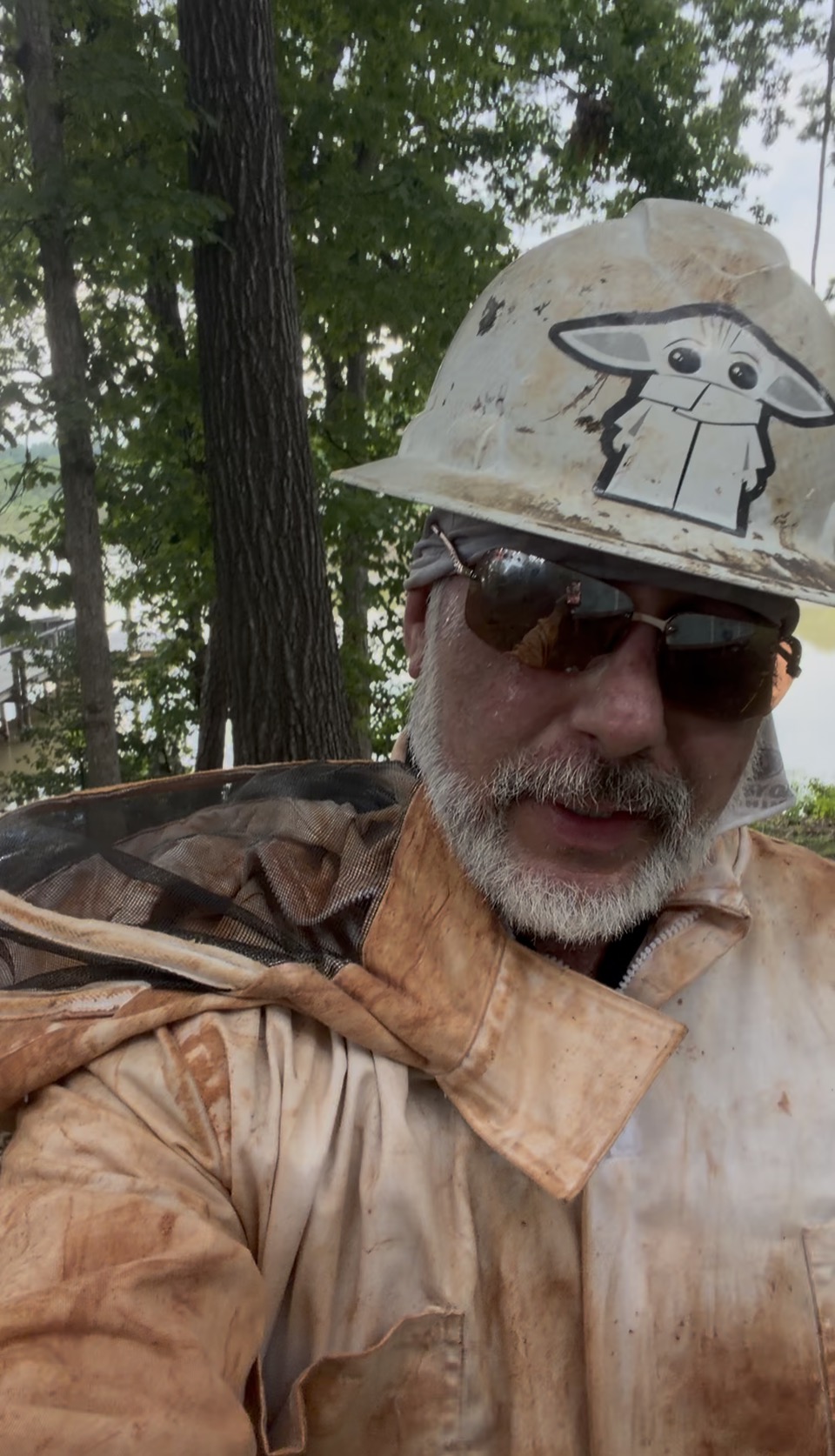

Our technicians are trained in eco-friendly, low-impact methods, which matters with stinging insects, since the goal is removing the nest without carpet-bombing the pollinators you want to keep.