


Envirosafe Field Files
The Baffling Case of the
Catawba Heights White Fairy Flies
Case 194 · Catawba Heights, Belmont, NC
A panicked call, a neighbor with her arms folded, and two back yards full of little white things that drifted like ash and danced with the fireflies at dusk. Every good science fiction picture starts this way. So does this one.
Listen to Case 194 · 6 min 26 sec
Narrated field report. Download the MP3
Every good science fiction picture from the nineteen sixties starts the same way. A quiet street. A summer evening. A neighbor who saw something she cannot explain, and a phone call nobody at the station takes seriously.
This one came in on a weekday afternoon, from a lady in Catawba Heights, on the north side of Belmont, where everybody knows everybody and nobody expects a mystery. She was not calm. Her yard was full of something. Little white things, hundreds of them, floating. They did not fly like a fly. They drifted, like ash off a fire, except they went up as often as they went down. They stuck to her hair. They stuck to her shirt. When she walked through the yard they rose around her in a cloud.
She said, and this is a quote, they look like fairies.
Buddy Penley from Envirosafe pulled up a little before six. Before he got the truck door shut, the neighbor from across the way was walking over, arms folded, because she had them too. Both yards. Both hedges. Same white specks drifting in the air between the houses like somebody had shaken out a pillow.
The neighbor had one more thing. She had already walked down to Southern Roots that morning and asked the girl at the counter, and the girl said she was the third person that week. Same question. Little white things in the yard. So whatever this was, it was not one yard and it was not one hedge. It was Catawba Heights.
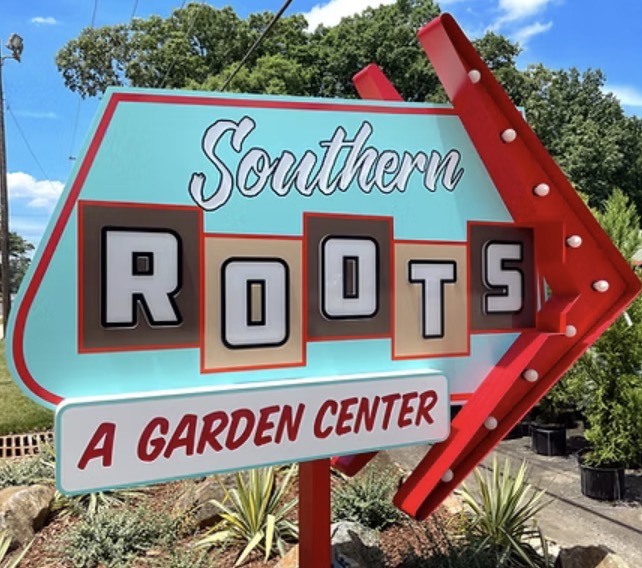
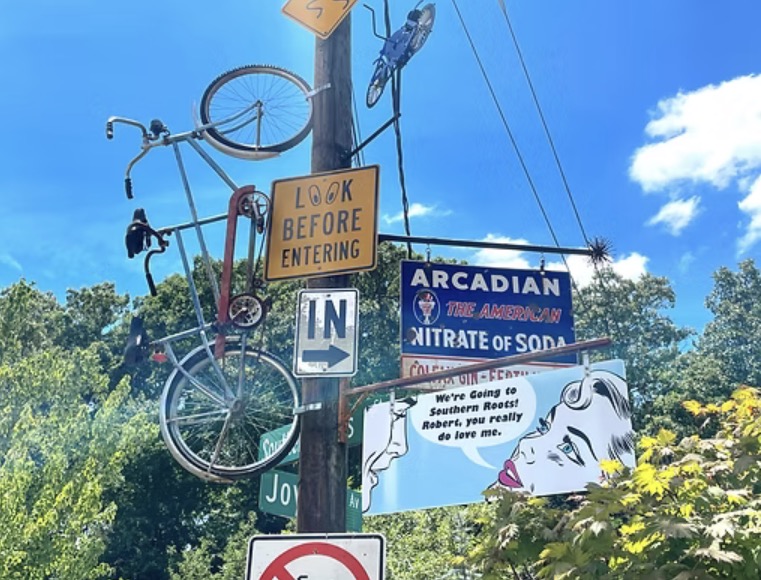
A plug for Southern Roots. If you live around Catawba Heights and have not been to Southern Roots Garden Center, go. It is the gem of the neighborhood. Good plants, folks who know them, and a counter where every yard question on the street ends up. That counter is how we knew this was bigger than one hedge. And while we are handing out credit, Mount Holly Farm Supply gets some too. Another local counter where folks bring their yard questions, and worth the drive if you have not been.
Three clues
Buddy stood on the sidewalk and watched. He did not reach for anything on the truck. A detective looks first.
Clue one. They were tiny. Smaller than a grain of rice. Each one wore a coat of white fluff, like a speck of cotton with legs, and the fluff was what caught the light.
Clue two. They were not coming from the ground and they were not coming from the house. They were lifting off the shrubs along the property line, and when the breeze moved, more of them let go of the leaves and joined the drift.
Clue three. It was the whole neighborhood, from the garden center on down to Mt. Holly Farm Supply, and nobody had been bitten. Not the lady, not the neighbor, not the dog. For a swarm of hundreds, that is unusual. Things that swarm people at dusk usually want something from you.
Then the sun dropped behind the trees, and the fireflies came out. And for about ten minutes, in two back yards in Catawba Heights, the little white fairies drifted and turned in the same air as the blinking fireflies, and the two neighbors stood on the grass and stopped being scared and just watched.
Buddy watched too. Then he walked over to the hedge and turned a leaf over.
Three clues. White fluff. Rising off the shrubs, not the ground. Hundreds of them and not one bite. What were the fairies? Think about it before you read on.
The answer
They were aphids. Woolly aphids, the fluffy white kind. The wool is not hair and it is not fur. It is wax. The aphid makes it and wears it, and it does two things. It keeps the aphid from drying out, and it makes birds and ladybugs think twice about eating a mouthful of candle. When a colony gets crowded in late summer, a whole generation grows wings and drifts off to find a new plant. That drift is what the lady saw. Not fairies. A moving day.
The leaf Buddy turned over was covered on the underside. Wool, and a sticky shine. Aphids feed on sap, and what they cannot use comes out the other end as honeydew, a sugar mist that coats everything under the colony. Give it a week and a black sooty mold grows on the honeydew, and that is when people start asking why their hedge looks like it has been through a fire.
And this is not a Belmont thing. The same white drift shows up every late summer from Catawba Heights to Steel Creek and the rest of south Charlotte, anywhere the hedges are thick and the nights stay damp. Same fairies, same fireflies, same phone call. Why now? Because late summer in the Carolinas is exactly what a woolly aphid wants. Warm days, damp nights, plants still soft and full of sap. The numbers go up fast, the wings come in, and one evening the yard is full of them.
What we did, and did not do
They do not bite. They do not sting. They do not come in the house looking for you. They are a plant problem wearing a Halloween costume. Left alone, the drift thins out on its own as our September weather starts to cool.
So Buddy did not spray a thing. He reported back, calmed the panic, and gave both neighbors the same advice: hose the honeydew off the patio furniture and the cars, keep an eye out for black sooty mold on the hedge, and call if the drift comes back next year, because it will, and it is easier to stop before the wings come in. Sometimes the job is telling somebody they are fine.
The lady asked him one more thing before he left. She asked if it was all right that she thought they were pretty. Buddy told her it was more than all right. Very few people in Belmont get to stand in their yard and watch a thousand tiny white things dance with the fireflies. Most of them never look up.
What the Damage Looks Like
Pretty in the air is one thing. On the plant it is another. Woolly aphids feed by sucking sap, and a heavy colony leaves its mark on the hedge or tree it lives on.
"Their feeding on the foliage causes the leaves to curl and pucker." The sap they pass comes out as honeydew, "a sweet, sticky liquid that covers lawn furniture, walks, and the ground cover under the trees," and "Dark sooty mold fungi grow in the honeydew and further disfigure objects in the landscape."
NC State Extension, Woolly Alder Aphid
"Some species inject toxins in the plant when they feed; these toxins can cause the tissue to become distorted and deformed."
Clemson Cooperative Extension, Home & Garden Information Center
So here is what Buddy tells folks to watch for: curled, puckered or yellowing leaves, twisted new growth, a shiny sticky film on the leaves or the patio furniture underneath, and black soot that wipes off with your thumb. One season of fairies will not kill a healthy hedge. Year after year of it can weaken the plant, and the sooty mold blocks the sunlight the leaves need.
Frequently Asked Questions
What are the little white flying things in my yard in late summer?
In the Charlotte area they are almost always woolly aphids in their winged stage. They look like specks of cotton drifting on the air, they gather at dusk, and they stick to hair and clothes because of the waxy fluff they carry.
Do woolly aphids bite?
No. They have no interest in people or pets. They feed on plant sap through a straw-like mouthpart that cannot pierce skin.
Why is there a sticky film on my patio furniture and car?
That is honeydew, the sugary waste aphids drop while feeding above. Rinse it off. If it sits, a black sooty mold grows on it.
Will they go away on their own?
The drift thins out as the weather cools, but the colony on the plant does not leave. It comes back bigger next year. Treating the plant in late summer, especially the undersides of the leaves, breaks the cycle.
Which plants get woolly aphids around here?
Crabapple, hawthorn, elm, alder, beech, cotoneaster, pyracantha and dense hedges in general. If a plant in your yard has a sticky shine and white fluff on the stems or the undersides, that is the source.
Do you treat woolly aphids in south Charlotte and Steel Creek?
Yes. Belmont, Gastonia, Mount Holly, south Charlotte and Steel Creek, all of Gaston and Mecklenburg counties and York County, SC. Call or text 704-860-2041.
Case 194. Closed.
Rodney Allman, Licensee · Envirosafe Pest Control, Belmont, NC · If your yard is full of something you cannot explain, do not fret. Call us and we will do our best to tell you what it is. 704-860-2041